Single Tooth Dental Implant Penrith
Replacing One Missing Tooth with a Dental Implant
If you have lost a single tooth, a dental implant and implant crown can provide a fixed replacement without relying on the neighbouring teeth for support.
At Best Western Dental Centre in Penrith, Dr Nathan Le provides dental implant treatment for missing and failing teeth using 3D CBCT imaging and digital implant planning.
Treatment is individually planned according to the position of the missing tooth, available jawbone, gum tissues, neighbouring teeth and your bite.
REQUEST A DENTAL IMPLANT CONSULTATION
What Is a Single Tooth Dental Implant?
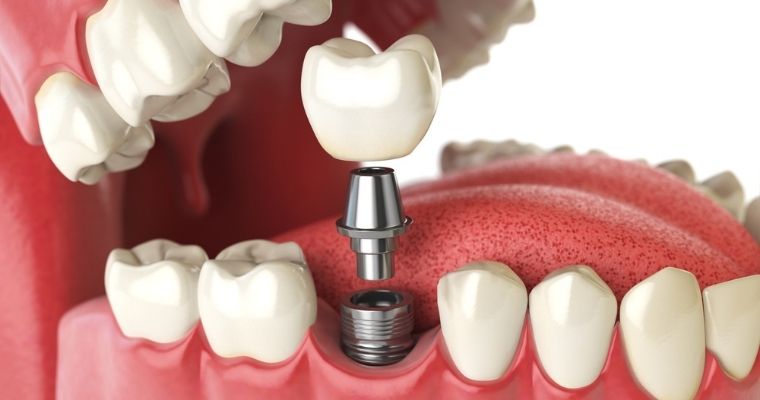
A dental implant is a small titanium fixture placed into the jawbone to replace the root of a missing tooth.
After the implant has integrated with the surrounding bone, it supports an implant crown designed to replace the visible part of the missing tooth.
The completed restoration has three main components:
the dental implant within the jawbone
an abutment connecting the implant to the crown
the implant crown
A dental implant does not recreate a natural tooth, but it can provide a stable, fixed replacement for a missing tooth.
Why Replace a Missing Tooth with an Implant?
There are several ways to replace a missing tooth, and an implant is not necessarily the best option for every patient.
One advantage of a single dental implant is that it generally allows the missing tooth to be replaced without preparing the neighbouring teeth to support a conventional dental bridge.
A single tooth implant may be considered when:
one tooth has already been lost
a tooth cannot reasonably be restored
a tooth has fractured
previous root canal or restorative treatment has failed
a tooth has been lost because of decay, gum disease or trauma
The condition of the neighbouring teeth, available bone, gum health and bite should all be considered when choosing the most appropriate replacement.
Do I Need to Replace a Missing Tooth?
Not every missing tooth automatically needs to be replaced.
The decision depends on the location of the missing tooth, appearance, chewing function, bite, neighbouring teeth and your individual priorities.
Possible options for replacing or managing a missing tooth may include:
a dental implant and crown
a conventional dental bridge
a fibre-reinforced bridge in suitable cases
a removable partial denture
orthodontic space closure in selected situations
accepting the space where clinically appropriate
Dr Le can discuss the advantages and limitations of the appropriate options before you decide on treatment.
Can the Implant Be Placed When the Tooth Is Removed?
Sometimes.
In selected cases, a dental implant can be placed at the same appointment as the tooth extraction. This is known as immediate implant placement.
Whether this is appropriate depends on factors including:
the condition of the tooth and surrounding bone
infection
available bone
gum tissues
position of the tooth
whether appropriate implant stability can be achieved
In other cases, it may be preferable to remove the tooth and allow the area to heal before placing the implant.
The decision is made after clinical examination and assessment of the CBCT.
Will I Need Bone or Gum Grafting?
Not every single-tooth implant requires grafting.
After a tooth is removed, the surrounding jawbone can reduce in width and height. Some implant sites therefore require additional treatment to provide adequate bone or improve the surrounding tissues.
Depending on the individual case, treatment may involve bone grafting, a sinus lift or gum grafting.
For upper back teeth, the position of the maxillary sinus can also affect the available bone for implant placement.
Your examination and CBCT help determine whether additional procedures may be required.
Learn more about Bone Grafting and Sinus Lift Procedures
3D CBCT and Guided Implant Planning
Accurate positioning is important because the implant needs to work with both the available jawbone and the planned replacement tooth.
At Best Western Dental Centre, CBCT 3D imaging is used to assess the implant site and relevant anatomical structures.
Digital planning can help evaluate:
bone height and width
neighbouring tooth roots
nerves and other anatomical structures
the maxillary sinus where relevant
proposed implant position and angle
position of the planned implant crown
For suitable cases, a custom surgical guide may be used to help transfer the digitally planned implant position to the mouth.
Learn more about 3D Guided Dental Implant Surgery
What Does Single Tooth Implant Treatment Involve?
Treatment varies between patients, but commonly involves the following stages.
1. Consultation and CBCT Assessment
Dr Nathan Le examines the area, reviews your CBCT and discusses whether an implant or another treatment option may be appropriate.
2. Treatment Planning
The implant position and planned replacement tooth are assessed together. Digital scans and other records may be taken where required.
3. Implant Placement
The dental implant is surgically placed into the planned position in the jawbone.
If required, extraction, bone grafting or other procedures may sometimes be performed at the same appointment.
4. Healing
The implant is allowed time to integrate with the surrounding bone.
Healing time varies depending on the implant site, bone quality, surgical procedure and individual patient.
5. Implant Crown
Once the implant is ready to be restored, a digital scan or impression is taken and the final implant crown is made.
The crown is designed to fit the implant position, neighbouring teeth and your bite.
Will I Have a Tooth While the Implant Heals?
If the missing tooth is visible when you smile, a temporary replacement may be considered during healing.
The type of temporary tooth depends on the individual case.
In selected situations, a temporary crown may be attached to the implant soon after placement. However, immediate temporary loading is not appropriate for every implant and depends particularly on implant stability, bite and other clinical factors.
Alternative temporary options may be recommended where necessary.
How Long Does a Single Dental Implant Take?
A straightforward implant case commonly takes several months from implant placement to completion of the final crown.
However, treatment time varies.
Cases involving extraction, bone grafting, sinus augmentation or additional healing may take longer. In some situations, extraction and implant placement can be combined, which may alter the overall treatment sequence.
After assessment, we can explain the expected stages and approximate treatment time for your particular case.
How Much Does a Single Dental Implant Cost?
The cost of replacing one tooth with a dental implant depends on the treatment required.
Factors can include:
condition of the existing tooth
extraction if required
available jawbone
bone or gum grafting
sinus augmentation where required
implant surgery
implant components
the final implant crown
Best Western Dental Centre does not advertise one implant price as though it applies to every patient.
Following assessment and treatment planning, we provide an individual written treatment plan and quotation outlining the proposed treatment and associated fees.
Learn more about Dental Implant Costs
How Do I Look After a Single Tooth Implant?
An implant crown requires regular cleaning and professional maintenance.
The implant itself cannot develop tooth decay, but plaque can accumulate around it and the surrounding gum and bone can develop inflammation and peri-implant disease.
Regular brushing, cleaning between the implant and neighbouring teeth, and professional dental reviews are important for maintaining implant health.
Learn more about How to Look After Dental Implants
Single Tooth Implant Treatment with Dr Nathan Le
Dental implant treatment at Best Western Dental Centre is provided by Dr Nathan Le (B.D.S., University of Sydney, 1999).
Dr Le has undertaken postgraduate education in implant dentistry in Australia and internationally, including training in implant surgery, bone grafting, soft-tissue management and digitally planned implant treatment.
Our Penrith practice has CBCT 3D imaging and digital implant planning available for implant assessment and treatment planning.
Frequently Asked Questions About Single Tooth Implants
Is a dental implant better than a bridge?
Neither treatment is automatically better for every patient.
An implant generally allows a missing tooth to be replaced without preparing the neighbouring teeth. A conventional bridge may be appropriate in other circumstances, particularly when neighbouring teeth already require significant restorative treatment.
The condition of the adjacent teeth, available bone, gums, bite and patient preferences should be considered.
Can I have an implant immediately after extraction?
Sometimes.
Immediate implant placement can be appropriate in selected cases when the bone, gum tissues and other clinical conditions are suitable.
In other cases, allowing the extraction site to heal before implant placement may be preferable.
Do I always need bone grafting?
No.
Many implant sites have sufficient bone without additional grafting. Bone grafting may be recommended where there is insufficient bone for the planned implant or where additional support is required around the implant site.
Can I get the implant and crown on the same day?
In selected cases, a temporary crown may be fitted soon after implant placement.
The final implant crown is generally provided after appropriate healing, and immediate loading is not suitable for every implant.
How long does a single tooth implant last?
Dental implants are intended as a long-term treatment, but no implant or crown can be guaranteed to last for a particular number of years.
Longevity is influenced by oral hygiene, gum and bone health, smoking, bite forces, general health and ongoing professional maintenance.
The implant crown may also require maintenance or replacement over time.
Request a Single Tooth Implant Consultation in Penrith
If you have one missing tooth or a tooth that may need to be removed, a consultation can help determine whether a dental implant is appropriate and what other treatment options may be available.
Best Western Dental Centre offers one free dental implant consultation per person with Dr Nathan Le.
A recent suitable CBCT is required, and a $120 booking deposit is required to secure the appointment.
If you require a CBCT at Best Western Dental Centre, the CBCT fee is $280 and your $120 deposit is credited towards this fee.
If you already have a recent suitable CBCT and attend your appointment, your $120 booking deposit is refunded.
Following assessment and planning, we can provide an individual treatment plan and quotation for you to consider.